Why open-plan rooms sound bad
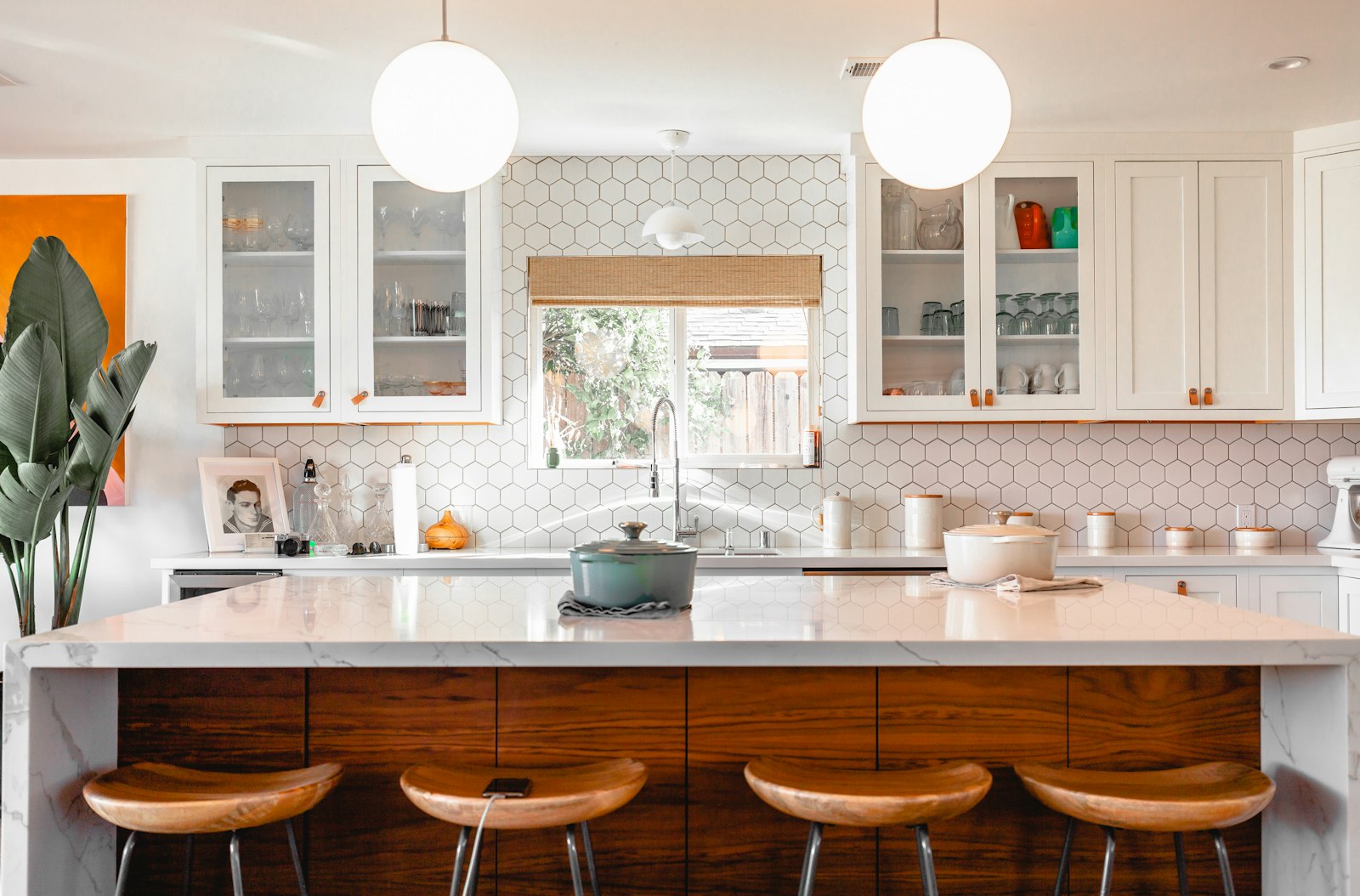
Acoustic problems in open-plan rooms come from one source: too few sound-absorbing surfaces. A kitchen has porcelain tiles, glass splashbacks, polished plaster ceiling, engineered timber floor and minimal soft furnishing. Sound waves from a conversation, the kettle, or the dishwasher bounce 6–10 times before being absorbed — high reverberation time (RT60) of 0.8–1.4 seconds ('church-like' acoustic) where speech intelligibility drops sharply. The same room with a thick rug, fabric-upholstered sofa, lined curtains and bookcase wall measures RT60 0.4–0.6 seconds — within range for comfortable speech. Pandemic-era home working made the problem critical: video calls from a corner of an open-plan kitchen-diner pick up cooker hood noise, dishwasher cycles, footsteps and family chatter; acoustic treatment in 2026 has moved from 'nice to have' to 'essential' in Builderr's high-end residential briefs.
Soft-layer interventions (low-cost, high-impact)
Five soft-layer interventions per priority. (1) Large rug under the lounge — 240cm × 340cm wool or jute rug, 16–25mm pile; absorbs sound in mid-high frequencies (voice range); £600–£2,400; biggest single intervention. (2) Fabric-upholstered sofa with deep cushions — replaces leather or thin-foam furniture; £1,800–£4,500 for a quality 3-seater. (3) Lined curtains on rear glazing — full-height ceiling-mounted track with thermal-lined backing absorb sound and add insulation; £900–£3,500 for 4m run; surprisingly effective on glass-walled extensions. (4) Bookcase or art wall on the lounge side — books and irregular surfaces scatter rather than reflect; £0 if existing books; £1,800–£4,500 for bespoke bookcase joinery. (5) Wool throw cushions and woven baskets — small but compound: £200–£800 layered through the room. Combined soft-layer treatment: £3,500–£12,000; reduces RT60 from 1.2s to 0.5–0.7s — comfortable, speech-intelligible.
Architectural and built-in acoustic measures
Where soft-layer alone is insufficient (large rooms 50m²+; vaulted ceilings; floor-to-ceiling glass on two walls), built-in measures add deeper absorption. Acoustic ceiling baffles — fabric-wrapped or perforated-timber panels suspended from the ceiling; effective 250 Hz–4 kHz covering most speech and kitchen noise; can be specified as a feature (timber slat ceiling with acoustic mineral wool behind) or hidden as flush plasterboard panels; £80–£220/m² ceiling coverage. Wall-mounted acoustic panels — fabric-wrapped framed panels in colours matching the interior scheme; 800mm × 1200mm panel £180–£450 each. Acoustic plaster — porous plaster (BASWA, Fellert) absorbs sound across the ceiling without visible texture difference; £180–£320/m² ceiling coverage; used in 5–10% of premium Builderr projects. Acoustic underlay under engineered timber floor — adds 5–8 dB impact noise reduction (important for first-floor open-plan above bedrooms); £8–£18/m². Built-in measures add £4,500–£14,500 on a 40m² open-plan room.
Broken-plan as acoustic strategy
The single most effective acoustic intervention is to break the open-plan room geometry. A Crittall steel screen with clear glass between kitchen and lounge zones reflects sound but reduces direct line-of-sight transmission; combined with soft furnishings, the lounge zone reads acoustically distinct. A half-height storage wall (1.2m tall pony wall) between zones reduces direct sound transmission by 6–10 dB. A freestanding double-sided bookcase combines visual zoning with acoustic absorption (books are excellent absorbers). A glass partition with a centrally-placed pivot or sliding door allows the room to be 'closed' for video calls and 'open' for entertaining — Builderr fitted 12 such partitions in 2025 across Wandsworth, Hackney and Islington kitchen-living refurbishments. Broken-plan combined with full soft-layer treatment is the gold standard for 2026 open-plan acoustic design.