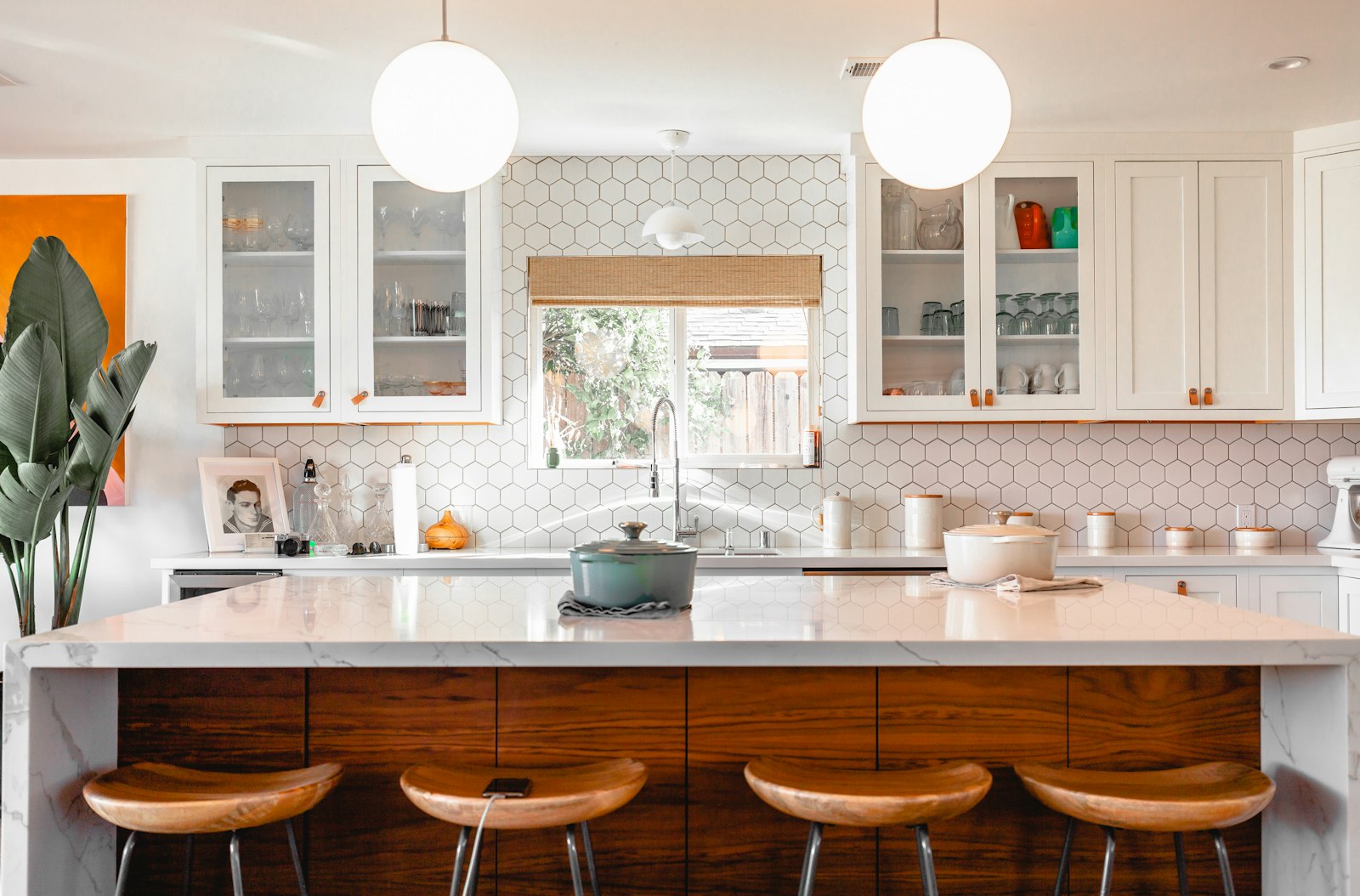
Lighting design principles
Layered scheme (general practice from John Cullen, Sally Storey, Maurice Brill schools): ambient layer = general illumination 100–300 lux floor; task layer = focused 300–500 lux at work surfaces (kitchen counter, desk, vanity); accent layer = 3:1 contrast on focal points (art, alcove, fireplace, plant). Colour temperature: 2700K warm white (living + bedroom) or 3000K (kitchen + bathroom — slightly cooler for clarity); avoid 4000K cool white in domestic (institutional feel). CRI (Colour Rendering Index): 90+ for living spaces (food + skin tones), 80+ acceptable for utility. Dimming: every circuit dimmable — TRIAC dimming standard for resistive LED (Aurora, Collingwood); 0-10V or DALI for commercial + premium domestic. Smart dimming (Lutron, Casambi, Loxone): scene programming + voice control + circadian rhythm tracking. Avoid downlight grid in regular spacing (cold, even illumination) — instead cluster downlights over task zones + use pendants/walls for ambient.
Downlight selection + install
LED downlight: 8–10W replaces 50W halogen 1:1; 15–20W for high ceilings or bright task; fire-rated (60-min or 90-min) when penetrating floor/ceiling between flats, between rooms in HMO, or in 3+ storey loft conversion above protected stair (Approved Document B compliance) — Aurora EFD, Collingwood H2 Lite, JCC FireGuard. IP rating: IP44 minimum in bathroom Zone 1 (shower) + Zone 2 (within 0.6m of shower); IP65 in Zone 0 (inside shower) + outdoors. Bezel finish: white standard; brushed nickel + black + brass premium (£25–£85 per downlight); flush-fit minimal bezel (Collingwood H6, Aurora MPro) hides lamp — luxury spec. Beam angle: 38° standard (general); 60° wide (large rooms); 24° narrow (accent, e.g. on artwork). Spacing: rule-of-thumb 1:1 (ceiling height in metres = spacing in metres) — typical 1.5–2m grid; concentrate over task zones (kitchen counter, sofa, dining table) + reduce frequency in transit zones. Dim-to-warm (Collingwood Halers H2 Lite Pro, Aurora SunSwitch): 2700K full → 1800K low — mimics tungsten incandescent dimming, premium living spaces.
Pendants + decorative
Pendants: focal moments — kitchen island (3-pendant cluster, 60–80cm above counter), dining table (single statement pendant, base 75–90cm above table), hallway (large drum pendant, double-height stair), bedside (replacement for table lamp, off circuit dimmer + switch at bedhead). Brands: Tom Dixon (Beat, Melt, Spring) £450–£1,800; Lee Broom £650–£2,400; Bocci (Vancouver — luxury) £950–£3,800 per piece; Foscarini £350–£1,200; Original BTC £185–£650; IKEA + Habitat + Heal's for budget. Switching: pendant on dedicated dimmer + separate downlight circuit — never on same switch (defeats layered control). Wall lights: Original BTC, Astro, Vibia, Davey Lighting — used as ambient between downlight task + pendant focal. Picture lights (low-level LED art lighting): Hogarth, Davey, House of Hackney — accent layer on art collection. Cove lighting: LED strip in cornice/coffer reflecting off ceiling for indirect ambient — concealed in joinery — £25–£85/m install + £35–£185 LED driver. Lighting design service: Cullen Lighting (premium), Sally Storey (mid-premium), independent designers £450–£2,500 typical residential project — pays back via avoidance of cluttered grid + over-specification.