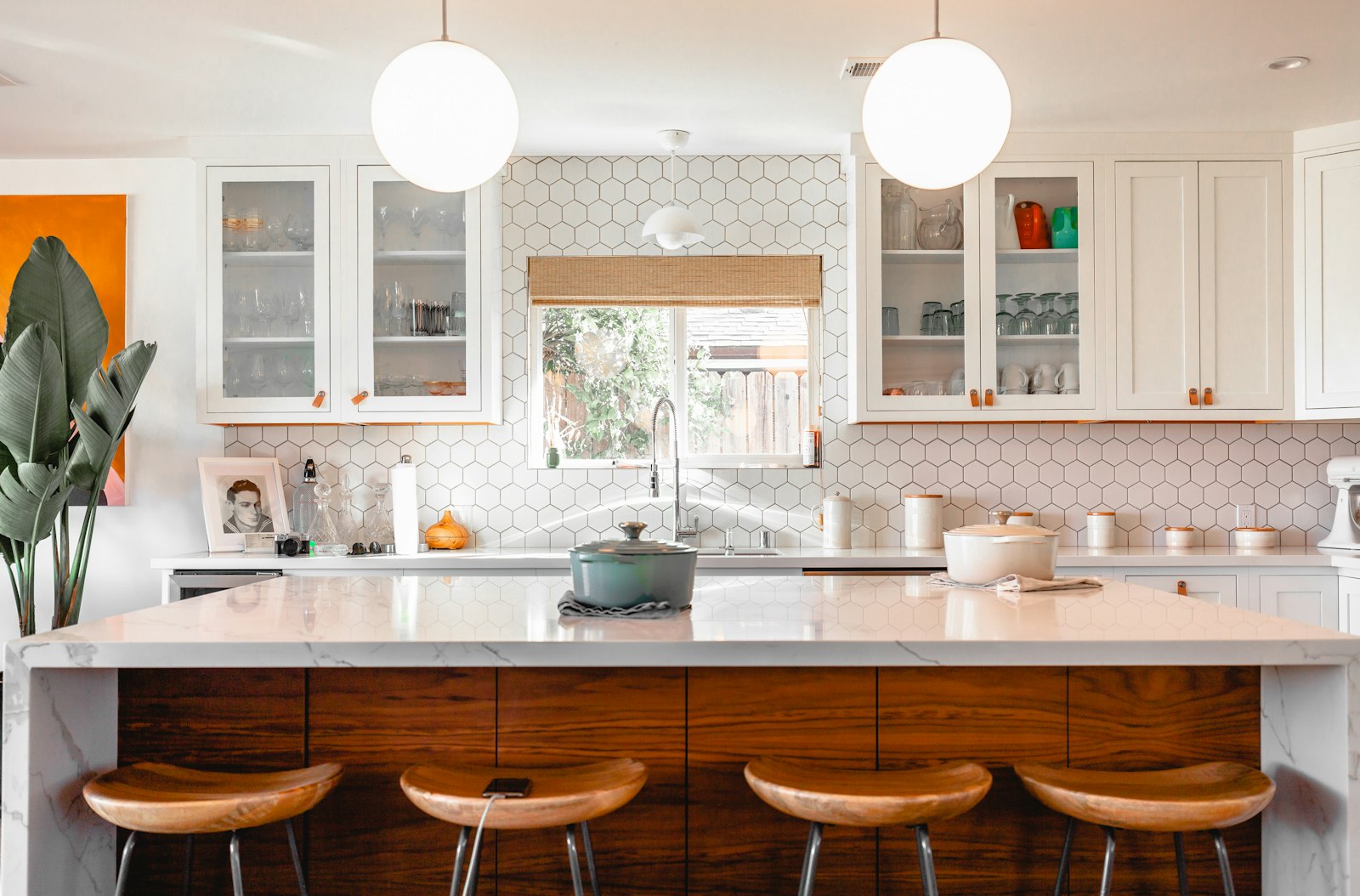
Handleless kitchen systems explained
Three handleless systems dominate London 2026 specifications. (1) J-pull handleless — a curved or angled lip is integrated into the top of each door, allowing fingers to grip and pull the door open. The lip is visible but flush with the door face. Common with sprayed lacquer or veneer doors. Cost premium over standard handle doors: £15–£40 per door. Most popular handleless system; widely available from value to premium ranges. (2) Push-to-open (push-pull) — no handle and no visible J-pull; doors open by pressing inward, triggering a spring mechanism that pushes the door outward 15–25mm; user then pulls the door fully open. Cost premium over standard: £80–£140 per door (Blum Tip-On, Hettich Push to Open Silent). Less visible mechanism — fully flush cabinet front. Suited to ultra-minimalist contemporary kitchens. (3) Channel-detail handleless (also called true handleless or rail handleless) — a horizontal channel or recess at the top of each row of doors creates an integral pull point. Aluminum or stainless steel channel inserted between adjacent rows of cabinets. Cost premium over standard: £40–£100 per linear metre of channel. Strong contemporary aesthetic; favoured by architect-led kitchen designs. Builderr's typical London spec: J-pull for mid-spec value-conscious projects; channel-detail or push-to-open for high-spec contemporary kitchens.
Cost breakdown for a handleless kitchen by spec tier
Five spec tiers for handleless kitchens in London 2026. Tier 1 — Value (Wren Kitchens Linea, Howdens Greenwich, IKEA Voxtorp): cabinetry £4,500–£8,500; worktop laminate or value composite £600–£1,800; appliances mid-spec £2,500–£5,500; sink/tap value £350–£800; install £3,500–£6,500. Total: £12,000–£23,000 supplied & installed for a typical 18–24m² kitchen. Tier 2 — Mid-spec (Magnet Linea, Wren Linea premium, John Lewis Modern Living): cabinetry £8,500–£14,500; worktop quartz or engineered stone (Caesarstone, Silestone) £1,800–£3,500; appliances mid-premium (Bosch Serie 8, Neff N90) £4,500–£9,500; sink/tap £750–£1,500; install £4,500–£8,500. Total: £24,000–£37,500 for 22–28m². Tier 3 — Mid-premium bespoke (Roundhouse, Smallbone, Mowlem & Co value range, deVOL Real Shaker handleless): cabinetry £15,000–£32,000; worktop premium quartz or natural stone (Caesarstone, Belenco, marble) £3,500–£7,500; appliances premium (Miele, Gaggenau 200 series, Bosch Serie 8 Master) £8,500–£18,000; sink/tap premium £1,500–£3,500; install £6,500–£12,500. Total: £35,000–£73,500 for 25–32m². Tier 4 — Premium bespoke (Bulthaup B3, Bulthaup B1, Boffi, Plain English, Smallbone, Roundhouse Sublime): cabinetry £35,000–£75,000; worktop premium natural stone or composite £6,500–£14,500; appliances Gaggenau, Sub-Zero & Wolf £18,000–£42,000; sink/tap premium £2,500–£6,500; install £10,000–£18,000. Total: £72,000–£156,000+ for 28–40m². Tier 5 — Super-premium (Boffi Code, Bulthaup B3 with bespoke modifications, Eggersmann, custom cabinetmaker): £150,000–£350,000+.
Door materials and finishes for handleless kitchens
Door material drives both cost and aesthetic. (1) Sprayed lacquer (matt or satin): smooth, seamless finish; available in any RAL or NCS colour; £80–£180 per linear metre of cabinetry surface above standard. Most popular mid-spec handleless finish. (2) Sprayed Fenix NTM (super-matt anti-fingerprint laminate): self-healing micro-scratches, anti-fingerprint surface; £180–£280 per linear metre. Premium mid-spec; widely used in 2024–2026 London handleless kitchens. (3) Real timber veneer (oak, walnut, ash, sapele): warm natural aesthetic; £180–£320 per linear metre. Suited to mid-premium contemporary projects (Roundhouse, Smallbone). (4) Real solid timber (oak, walnut): premium hand-crafted aesthetic; £350–£600 per linear metre. (5) Stone or porcelain panels (Maximum Stone, Neolith, Lapitec): cabinet doors faced with thin stone panels; £400–£900 per linear metre. Premium contemporary aesthetic; growing 2026 trend. (6) Glass (back-painted or fluted): contemporary, easy clean; £150–£300 per linear metre. (7) Brass, copper or bronze metal facing: bold accent for island fronts or feature cabinets; £400–£900 per linear metre. (8) Acrylic high-gloss: glossy mirror-like finish; £100–£200 per linear metre; popular 2010s, less common 2024–2026.
Appliances and worktops for handleless kitchens
Handleless kitchen appliances are increasingly specified with integrated and flush-fit appliances to maintain the seamless aesthetic. Appliance integration. Tier 2+: integrated appliances (oven, microwave, coffee machine) flush-fit within column units; £400–£800 premium per appliance for integration kit. Tier 3+: hidden push-to-open appliance housing; column units with no visible appliance fronts. Tier 4+: bespoke joinery columns with integrated appliances flush to door fronts; appliance fronts replaced or skinned in matching door material. Worktops for handleless kitchens: quartz/engineered stone (Caesarstone, Silestone, Compac, Belenco) dominant mid-spec; £200–£550/m² supplied & fitted including thin-edge profile typical of handleless aesthetic. Premium worktops: natural marble (Carrara, Calacatta, Statuario) £500–£900/m²; book-matched marble feature £900–£1,800/m². Porcelain large-format (Maximum, Neolith, Lapitec) £450–£900/m² — thin (12mm) seamless surface popular with handleless aesthetic. Solid surface (Corian, Hi-Macs) £350–£650/m² — seamless joins and integrated sink. Engineered timber worktop (full-thickness oak, walnut) £250–£550/m² — warm material for islands and breakfast bars; lower priority for sink/cooker areas due to water and heat resistance issues.