Sizing extraction
Sizing rule: extract rate (m³/h) = kitchen volume × 10 air changes per hour (boost mode). Typical 20m² kitchen × 2.5m ceiling = 50m³ × 10 = 500 m³/h boost. Always ducted-to-outside if possible. Hood width should match or exceed hob width (900mm hob = 900mm hood minimum). Hood-to-hob height 600mm electric, 650mm gas (manufacturer specs vary). Ducting: 150mm diameter rigid round duct preferred; minimise bends (each 90° bend = 6m of straight duct in pressure loss); maximum run typically 8m. Wall vent termination: 150mm grille with backdraft damper. Don't terminate into roof void or wall cavity — moisture damage.
Island and ceiling extraction
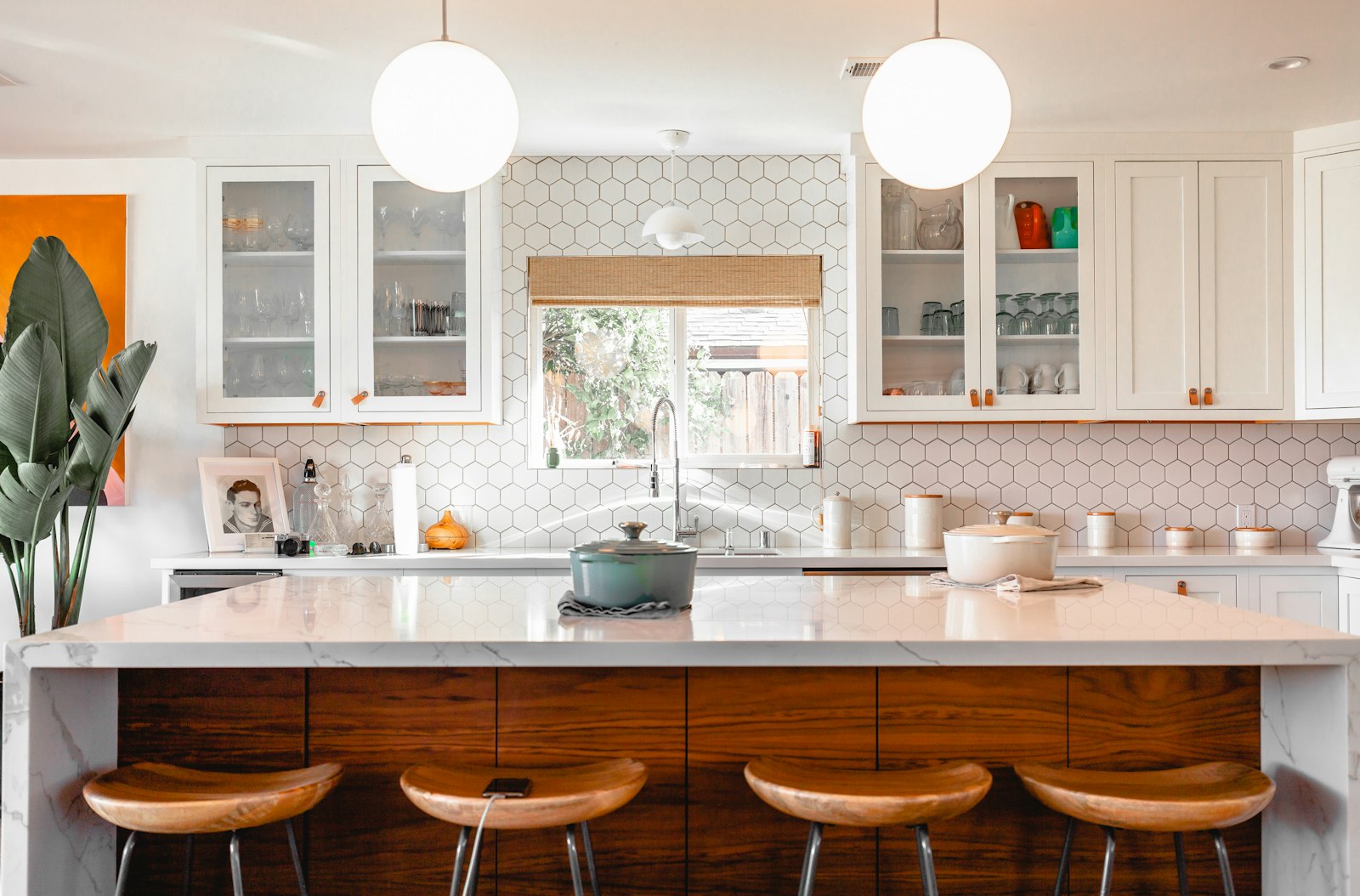
Island hob options: (1) Downdraft extractor — rises 250mm above hob when active, extracts at 700 m³/h. Cost £950–£2,400. Effective for moderate cooking; loses some performance to lateral steam plumes. (2) Ceiling-mounted extractor — large flush unit above island (1,200×600mm), discreet, very effective. Cost £1,800–£4,500. Requires routing duct through ceiling void or above-ceiling soffit. (3) Pendant hood — feature hood hanging above island. Cost £1,400–£8,500 for designer brands. Most effective extraction but visually dominant. Ducting from island is the install challenge — runs through floor (to basement/external wall) or up through ceiling void (to roof termination).
Re-circulating vs ducted
Re-circulating (charcoal filter): used when ducting impossible (e.g. internal flat with no external wall route). Removes smoke and some grease; does NOT remove moisture or odour (filtered air smells less but kitchen still humid). Charcoal filters cost £30–£80 every 6 months. Acceptable for occasional cooking, electric induction, low-fat. Inadequate for: gas hob, wok cooking, frying, sauces with strong odour. Ducted: always preferred. London flat without external wall route: consider downdraft hob (extracts horizontally into low-level external duct), or accept re-circ with enhanced ventilation elsewhere (MVHR uplift in kitchen).