Terrazzo types and London 2026 cost
Terrazzo is a composite flooring of stone/marble/glass chips set in a cement or epoxy resin matrix. Five types dominate London 2026 specifications. (1) In-situ poured cement terrazzo — traditional method; mixed and poured on-site; ground and polished to a smooth finish; £350–£550/m² supplied & installed (Diespeker, Quiligotti, Sample & Hold). Heritage spec; long lifecycle (50+ years). (2) In-situ poured epoxy terrazzo — modern variant using epoxy resin instead of cement; faster cure (24–48 hours vs 4–6 weeks for cement); thinner section (5–10mm vs 20–40mm cement); £280–£420/m². (3) Terrazzo tiles (precast) — pre-cast terrazzo tiles supplied in 300×300mm to 1200×600mm sizes; £180–£280/m² for mid-spec tiles (Diespeker, Dzek); £280–£450/m² for premium designer tiles. (4) Engineered/porcelain terrazzo-look tiles — porcelain tiles that mimic terrazzo aesthetic; £40–£140/m² supply; £140–£220/m² supplied & installed. Cost-effective alternative for budget projects. (5) Bespoke terrazzo (designer terrazzo with custom aggregate sizes, colours, patterns) — £350–£700/m² for fully custom designs (Dzek collaborations with designers, Bespoke Terrazzo, Etgar Terrazzo).
In-situ vs tile terrazzo — which to choose
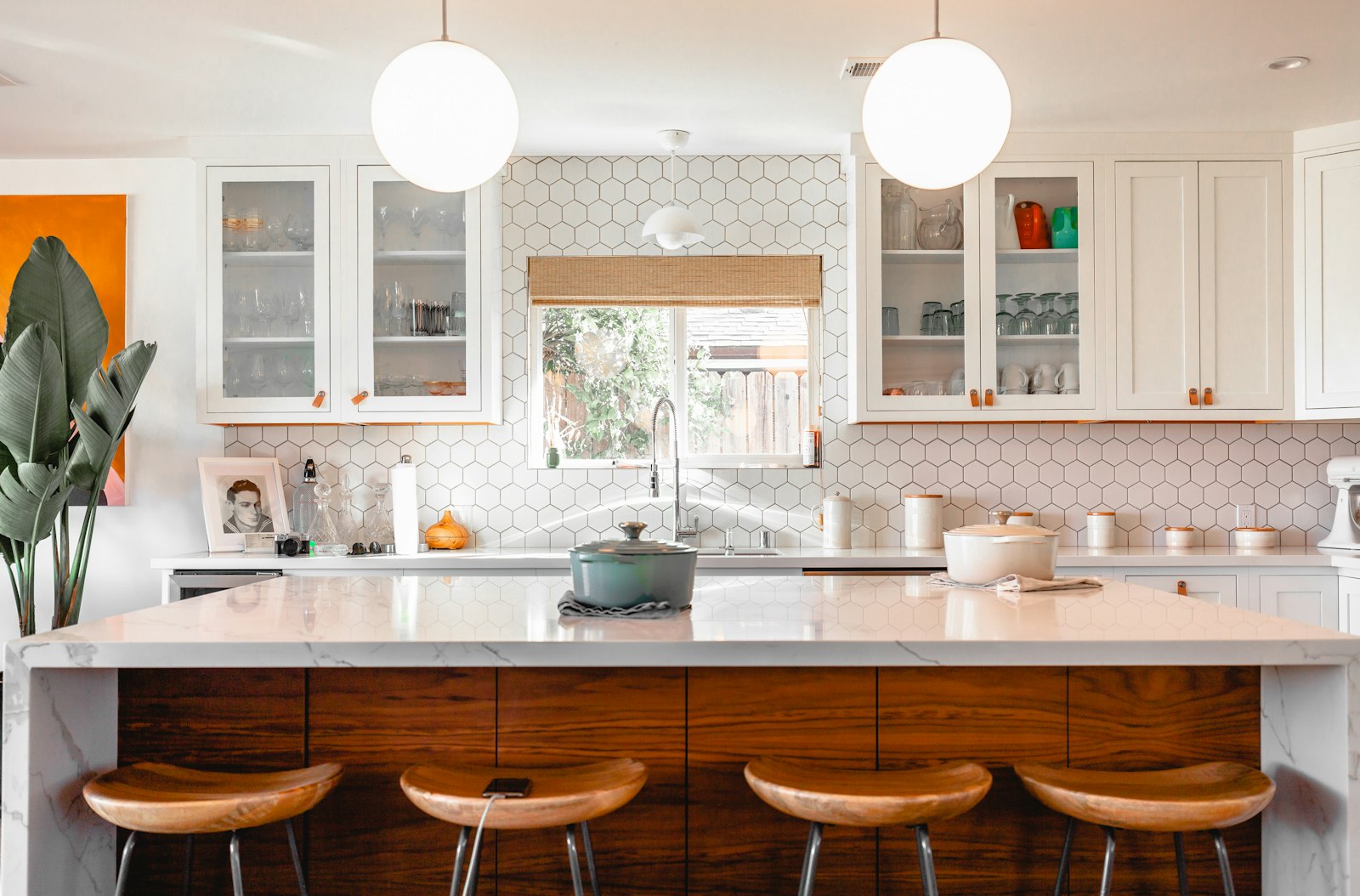
Choice between in-situ and tile terrazzo depends on three factors. (1) Aesthetic — in-situ poured terrazzo gives a seamless, monolithic surface with no grout lines; ideal for large open-plan kitchens, retail spaces, and contemporary commercial-grade residential interiors. Tile terrazzo shows grout lines on a 600–1200mm grid; can be elegant if tile size is large but visually distinct from in-situ. (2) Installation time and disruption — in-situ poured cement: 4–6 weeks (mix, pour, cure, grind, polish, seal); requires sealed clean site; significant disruption. In-situ epoxy: 1–2 weeks. Tile: 2–5 days for a 30m² area. (3) Cost — tile is approximately 50–70% the cost of in-situ poured terrazzo. Recommendation: tile terrazzo for residential renovations with a defined timeline and moderate budget; in-situ poured for prime renovations, hospitality projects, or where a continuous seamless floor is the design intent. Builderr's typical London renovation spec: tile terrazzo (Diespeker Romana 60×60 or 80×40 cm tiles) for £80k–£200k kitchen extensions; in-situ poured for £300k+ whole-house renovations and prime central London projects.
Terrazzo design choices and London 2026 trends
Terrazzo design parameters. (1) Aggregate size — fine (1–3mm chips, refined and subtle); medium (3–10mm chips, classic terrazzo look); coarse (10–25mm chips, bold and contemporary); jumbo (25–50mm chips and large stone fragments, dramatic). London 2026 trend: medium-to-coarse aggregate is the dominant spec; jumbo aggregate gaining ground in restaurants and hospitality. (2) Aggregate material — marble (classic), granite (more contrast), glass (sparkle and colour), mother-of-pearl (luxury, expensive), recycled aggregate (sustainable). London designer terrazzo (Dzek, Bespoke Terrazzo, Sample & Hold) commonly uses recycled glass aggregate for distinctive colour palettes. (3) Matrix colour — white cement (default; bright and contemporary); coloured cement (terracotta, charcoal, sage, blue) gaining popularity in 2024–2026 for distinctive designer aesthetics. (4) Finish — honed (matt, refined, contemporary), polished (gloss, traditional, hospitality-style), brushed (textured, slip-resistant, contemporary). Honed is the dominant 2026 residential spec. (5) Pattern — random aggregate distribution (classic); designed pattern (specific aggregate placement, hand-set); inlaid borders (heritage). Designer terrazzo with curated aggregate (large pieces of distinctive stone, semi-precious aggregate, custom colour matrix) is a 2024–2026 prime spec; Dzek's collaborations with Max Lamb, Sophie Smallhorn, and Pierre Yovanovitch are noted examples.
Installation and substrate requirements
Terrazzo installation requirements. Substrate: in-situ poured cement terrazzo requires a sound concrete slab (minimum 100mm thick) or a structural timber substrate with concrete topping; level to ±5mm tolerance. In-situ epoxy: more forgiving of substrate variation but requires a sealed, dry surface. Tile: requires a level substrate (level to ±3mm); typically over a self-levelling compound (£15–£25/m²) and tile backer board. Underfloor heating compatibility: terrazzo is fully compatible with underfloor heating (UFH); thermal mass of the slab improves UFH efficiency. Specify UFH thermal mass detail with the installer. Sealing: cement-based terrazzo requires a penetrating sealer (Fila MP90, Lithofin Stain Stop) applied after installation; re-seal every 2–4 years. Epoxy terrazzo: self-sealed; no re-seal required. Slip resistance: residential terrazzo (honed finish) has a typical pendulum value of 25–35 (PTV) — acceptable for residential but slippery when wet. For wet areas (bathroom, kitchen near sink), specify a textured or brushed finish with PTV 35+. Edge detail: terrazzo borders neatly into adjacent flooring (timber, tile, stone) with a brass or aluminium edge strip; budget £30–£60/m for edge strips. Acoustic: terrazzo on UFH-heated screed performs as a hard floor (LIR 15–25 dB) — rugs are recommended to soften acoustics in living areas.